
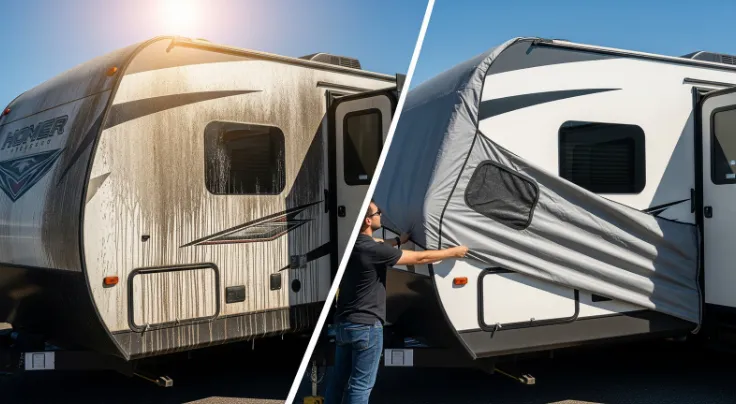

To pick the right trailer cover for any vehicle, start by measuring your trailer’s length, width, and height yourself, then choose a material that suits your climate and storage conditions. Do not rely only on the manufacturer’s numbers, because added items like ladders, spare tires, bike racks, or roof A/C units can change the size you need.
Finding the best trailer cover means finding the right balance between a snug, secure fit and breathable, UV-resistant fabric that limits moisture buildup and shields the outer surface from sun, rain, and dirt.
Whether you own a large fifth-wheel or a small pop-up camper, the aim is to build a barrier that protects your trailer from the “big three” sources of damage: sun, water, and wind. If you know the basic differences between fabric types and cover features, you can keep your vehicle in good shape so it is ready to go whenever you plan your next trip.
Why Use a Trailer Cover for Your Vehicle?
Protects Against Weather and Environmental Damage
An uncovered trailer is exposed to every kind of weather. Constant UV rays are often the biggest problem: they fade paint, make decals peel, and cause plastic parts to dry out and crack. A good cover blocks most of these rays and keeps inside temperatures much lower, which helps protect electronics, fabrics, and other heat-sensitive parts inside.
Covers also help protect against water. Rain, snow, and sleet can work into tiny cracks or seams. When that water freezes and expands, it can loosen sealant and open gaps that later turn into leaks and rot. A cover also stops tree sap, bird droppings, and acid rain from sitting on the surface. These can stain and eat into the finish if they stay there for even a single season.
Improves Longevity and Resale Value
The outside of a trailer is the first thing a buyer sees. Gel-coated fiberglass, common on many RVs and trailers, often turns dull and chalky because of oxidation. A cover helps keep the glossy look and prevents the surface from aging too quickly. A clean, shiny exterior usually gives buyers confidence that the owner took good care of the rest of the trailer too-inside and out.
A cover also helps protect the roof and sidewalls. By limiting UV damage to sealants and rubber seals around windows and doors, it lowers the chance of leaks, soft spots, and rot. These problems can be some of the most expensive to fix. Spending money on a cover now can save you thousands in roof and wall repairs later on.
Reduces Cleaning and Maintenance Needs
If you have ever scrubbed “black streaks” off a trailer, you know it can take hours. Those streaks come from dirt and grime that collect on the roof, then run down the sides when it rains. A cover keeps the roof cleaner, so those streaks do not form as easily, and you do not need to wash and wax as often.
A cover also keeps out dust, pollen, and wind-blown debris. Companies like Shade4You emphasize that high-quality protective materials are essential for maintaining the exterior of outdoor equipment, ensuring long-term durability. Instead of spending half a day washing and prepping your trailer before each trip, you can pull off the cover and go. That means more time traveling and less time cleaning.
What Types of Trailer Covers Are Available?
Travel Trailer Covers
Travel trailer covers fit the standard rectangular shape of most towable campers. They usually have long zippered panels on the passenger side so you can still reach the door with the cover on. Because travel trailers come in many lengths, these covers are often sold in two-foot size steps to give a close fit without being too tight or too loose.
Utility Trailer Covers
Utility trailers are easy to ignore, but their open design leaves metal and wood exposed to weather. These covers are often simple in shape but use very waterproof materials. The main goal is to protect the frame and wooden floor from steady rain and snow that can cause rust and rot.
Horse Trailer Covers
Horse trailers often have rounded fronts or “bullnose” designs. Covers for these trailers are shaped to fit that curved front and usually include more vents. Extra airflow helps remove moisture and odors from inside, cutting down the chance of mold and mildew forming in the stalls.
Boat Trailer Covers
Many owners cover their boats but forget the trailer that carries them. Boat trailer covers (or covers that go over both boat and trailer) protect winches, lights, wiring, and tires. This is important in coastal or wet areas, where salt and heavy rain can quickly corrode metal and electrical parts.
Enclosed Cargo Trailer Covers
People often use enclosed cargo trailers for long-term storage of tools, bikes, or other gear. Covers for these units are similar to travel trailer covers but usually made from heavier material on the sides. They are built to handle tight parking spots, possible bumps from nearby vehicles, and strong winds.
Fifth Wheel Covers
Fifth wheel covers are made for trailers with a raised front section that hooks into the truck bed. They must allow for higher front ceilings and the overhanging “nose” of the trailer. Because fifth wheels tend to be tall, these covers often use reinforced strapping systems that pull the extra fabric tight so it does not balloon in the wind.
Pop-up Camper Covers
Pop-up or folding campers need covers that fit the camper when it is folded down flat. The focus is on the roof, since the flat top can collect water puddles. Getting the height right matters here, so the cover reaches the frame but does not drag on the ground.
How to Choose the Right Trailer Cover for Every Vehicle Type
Measure Your Trailer Dimensions Accurately
Do not rely on the model name, brochure, or owner’s manual for size. Use a tape measure and find the actual body length. Measure from the farthest point at the rear (including spare tire, ladder, or cargo racks) to the farthest point at the front of the body. Do not include the hitch or tongue.
For height, measure from the top of the roof down to the bottom of the trailer frame. Do not measure to the ground, and do not include rooftop accessories like A/C units or antennas, since most covers include some extra height for these items. For width, measure across the widest part of the body, but leave out mirrors.
Match Cover Type to Vehicle and Usage
Think about how and where you will store your trailer. If you park it in an area with strong winds, choose a cover that has a built-in strap system to pull the fabric tight. If you keep it in a garage or under a carport, a lightweight dust cover may be enough. For outdoor storage, use a cover that is made specifically for your trailer style (for example, a fifth wheel cover on a fifth wheel) so the seams line up with the trailer’s edges and corners.
Custom vs. Universal Fit
Universal covers cost less and come in size ranges (such as 24-26 feet). They can work well but may leave extra fabric that flaps in the wind.
Custom-fit covers are made for a specific make and model. They fit closely, reducing loose spots that can move and rub against the finish. They usually cost more but often last longer because they do not move as much and are less stressed by wind.
Which Materials Provide the Best Protection?
Polyester and Polypropylene
Polypropylene is a common material for side panels because it is light and breathable. It lets moisture escape from under the cover, which helps prevent mold and mildew. Polyester, especially when treated to resist UV rays, usually holds up better against the sun and is more tear-resistant than single-layer polypropylene. Many mid-range covers use polyester on the roof (for sun and weather protection) and polypropylene on the sides (for airflow).
Vinyl and PVC
Vinyl and PVC-coated fabrics are very tough and fully waterproof. They resist tears and punctures well. However, they do not breathe on their own, so they need good vent systems to reduce condensation on the trailer surface. These covers are a good choice for utility trailers or trailers stored where there is heavy snow and ice.
Multi-layered Fabrics
Multi-layered fabrics offer strong overall protection. They usually have:
- An outer layer that blocks UV rays
- A middle layer that is waterproof
- A soft inner layer that will not scratch the finish
A 3-ply or 4-ply roof panel, for example, gives extra protection from heavy rain and hail and helps the cover hold its shape and strength for many seasons.
UV, Water, and Mildew Resistance
Whatever material you choose, look for fabric treated or made to resist UV rays. Solution-dyed acrylics like Sunbrella build the color into the fibers, which helps them resist fading for a long time. Also look for “microporous” coatings or finishes that let air pass through while blocking liquid water. This helps manage moisture without letting rain seep in.
Key Features to Look for in a Trailer Cover
Adjustable Straps and Buckles
A cover works best when it is held firmly in place. Choose covers with cinch systems or adjustable straps at the front and rear so you can tighten loose fabric and match the trailer’s shape. Underbody straps with weighted buckles are very helpful: you can toss them under the trailer and clip them on the other side, which helps keep the cover from lifting in strong wind.
Ventilation Panels
Vents have two main jobs: they let air move through so the cover does not puff up like a sail, and they help moisture escape. Good airflow lets humidity and ground splash dry out, which lowers the chance of mold and mildew forming on your trailer’s surface.
Reinforced Corners and Seams
Corners and edges are the most likely spots for tears. Look for covers with double-stitched seams and extra fabric at all four top and bottom corners. Some higher-end covers also include repair or reinforcement patches you can stick on where the cover touches sharp items like downspouts, ladder edges, or bumper corners.
Zippered Access Panels
If you want to get into your trailer while it is in storage, you should not have to remove the whole cover. Quality covers include zippered panels-usually on the passenger side and sometimes on the rear-so you can reach doors and compartments. Check that the zippers have fabric flaps over them to prevent scratching the paint.
Ease of Installation and Removal
If a cover is hard to put on or take off, it will probably stay in the box. Look for clear “front” and “rear” labels and materials that are light enough to handle without a struggle. Some covers are packed inside-out so you can place them on the roof and roll them down the sides. Others are light enough for one person to manage with a ladder.
How Does Climate Affect Trailer Cover Selection?
Cold, Snowy, and Icy Conditions
In colder regions, snow buildup and freeze-thaw cycles are the main worries. Choose a heavy-duty, multi-layered roof panel that can support snow weight. Breathability matters here too. As snow melts by day and freezes at night, a breathable cover helps moisture escape instead of sitting in the trailer’s seams, where it could lead to cracks and leaks over time.
Hot, Sunny, and Dry Climates
In very sunny areas, UV resistance should be your main focus. Pick light-colored covers (white, light gray, or tan) that reflect sunlight. Materials like DuPont Tyvek and UV-treated polyester are made to block harsh rays and help keep the interior temperature lower, which protects seals, fabrics, and electronics inside.
Rainy or Humid Environments
In wet or humid areas, trapped moisture can quickly cause mold and mildew. A fully waterproof but non-breathable cover can act like a greenhouse, holding in damp air. For these locations, choose covers with plenty of vents and breathable side panels, such as polypropylene, so moisture can evaporate instead of staying against the trailer walls.
Wind Exposure
If your trailer sits in an open lot or field with strong winds, make wind resistance your top concern. A loose cover can move back and forth like sandpaper, wearing down the finish. Look for covers with many tie-down points-front, back, and underneath-and strong straps that spread the force of the wind across the fabric instead of pulling hard on one spot.
Common Mistakes to Avoid When Buying a Trailer Cover
Selecting the Wrong Size
A cover that is too small will be stretched tight and likely to tear at seams or break zippers. One that is too large will flap and move, wearing out the fabric and scuffing the paint. If your measurements sit between two sizes, many specialists suggest going with the smaller one because most brands add a little extra length to each size range.
Overlooking Important Features
Do not choose based only on price if it means giving up vents, straps, or a soft inner layer. A cheap plastic tarp may keep off some rain but will not breathe or stay in place well. Without vents, wind can rip a cover off. Without a soft inner surface, the cover can leave hairline scratches all over gel-coat or paint. Always look for these basics:
- Vents
- Adjustable straps or tie-downs
- Soft, breathable inner fabric
Ignoring Climate Needs
Using a light UV-only cover in a harsh winter area can cause problems: the material might crack in freezing weather or collapse under heavy snow. On the other hand, a thick, non-vented winter cover in a hot, humid area can trap moisture and cause mold. Always match the fabric weight, breathability, and UV or snow rating to the typical weather where your trailer will sit.
To sum up, picking the right trailer cover is a key part of protecting your vehicle. The cost may seem high at first, but it is far less than paying for a new roof, new decals, or a full paint job. For the best protection, add a few simple habits: use tire covers to shield rubber from the sun, and place wood or plastic under the tires so moisture from the ground does not soak into them. If you plan to store your trailer for several months, remove the batteries and keep them in a cool, dry place. With a good, well-fitting cover and these basic care steps, your trailer can stay in good condition and ready for years of travel.